

Almost Perfect
the journey through the darkness of my twenties when everything fell apart

As I stood in front of the house on Martinez Street, snowflakes fell in tiny jewels upon my coat and hair. I closed my eyes and faced the grey sea of asperitas clouds, snow clouds in shadowed waves, my boots crunching slow into icy slush toward the little house I once lived in with my fiancé back in 1994, although don’t hold me to exact timelines.
It must have been around then, it was after the Northridge earthquake, called a ‘buried blind thrust’ fault. The seismic center readings said it lasted eight seconds. How those eight seconds shook at a devastating 6.7 magnitude.
I placed my hand on the wooden gate as if reaching back in time, dug the toes of my boots into the snow to search for the solid ground underfoot. My hand asked and the question was answered, yet it took decades to arrive. It led me back inside that adobe house with the cobalt blue wooden gate with the cowbell hanging on it.
I’d painted that gate with the bright blue trim paint of so many other adobe houses in Santa Fe, fastened that cowbell, copper now turned rust, to the small slatted window where I once peeked out to see who was waiting on the outside.
Many nights I sat in that front courtyard and marveled at the stars in that wide expanse of sky.
When we first moved to New Mexico, it was to escape the concrete jungle of Los Angeles after the Northridge quake shook us into flight mode where we wanted to walk the dirt paths and mud and rocky arroyos, under blue hour light at twilight and wide open skies and piñon and clover and streams.
I sipped bootleg mezcal brought from Oaxaca in a clear glass bottle by my fiancé’s friend in Taos, the taste of smoke and earth lingered in the equator of my mouth.
In that garden I’d planted climbing wisteria, attempted to train it over the arch above the blue gate, but it didn’t grow and stay.
The snow fell as I stood there, a ghost of my own memory.
The last time I walked through that gate, I was leaving for Los Angeles again, carrying cardboard moving boxes in and out with my two hands, packed the truck full, stacked boxes of my belongings from bottom to top, pressed the furniture against the upright Story & Clark piano I’d played since I was about five.

Rusty was handsome. I see him there in my mind’s eye, sitting across the white tablecloth from me, dinner in the opulent dining room, ceiling opened up to the night sky.
My childhood best friend Autumn was my guest for our student dinner at the French fine dining restaurant, one that no longer exists, on La Cienega Boulevard in West Hollywood.
L’ Orangerie served all the classic French dishes, such as the oeufs à la coque which we learned to make in class. It was among the silverware and glittering wine glasses and the sky above when Rusty shot me a sly look across the table. I admired his face and gave a look back, curving my eyes around the gold hoop in his one ear, coppery blond hair to his shoulders. I was maybe more than twenty one then and he was maybe twenty nine.
After dinner, he secretly handed Cecilia, our culinary instructor, a folded paper note with his phone number on it to give to me as he left the restaurant with his date.
In a matter of a few months, after many dates and dinners, as we dressed up in 18th century movie set wardrobe for a costume party, as we went wine tasting up in the Central Coast, as I rode clinging to him on the back of his motorcycle, that’s when he and I decided it was time I gave up my apartment in Malibu Canyon and moved into his downtown loft.
He even built out a closet for me in the upstairs bedroom since there was nowhere for all my clothes—he’d lived there as an art and photography student and everything was makeshift bohemian, photography gear and lighting, backdrops, a darkroom.
In the kitchen, the Wolf range was often at full bore with all six burners going, as Rusty tossed pans full of flame and sauce and sautés, while I layered a cake with cream frosting and chocolate shavings. As we joined our friends at the long dining table set with my grandmother’s crystal and his family’s silverware, he put his warm hand upon mine, leaned over and whispered, you’re almost perfect.
After living like this in his downtown loft for years, for what felt like the most perfect season—trips to Hawaii, snorkeling in Kona, where he bought me those mermaid earrings I adored, a gold mermaid holding a pearl for each ear as she curved around the edge of my earlobe.
We gave dinner parties in our loft and went swing dancing at The Derby, and sipped Cosmos as the swing band played, Royal Crown Revue, the saxophone wailing and the double bass thumping. A man named Johnny Walker dressed in his zoot suit threw me into graceful twirls on the dance floor, made me look like I knew how to swing dance.
Rusty protected me from bar flies like Sven, a guy who looked like Max Headroom, who hovered around me trying to pick me up until Rusty had just enough.
Kevin shooed Sven off one night when Rusty wasn’t there and I had a few too many cocktails. We were nestled in the booth with our drinks as Sven slid in to hit on me, shameless about it. This was before guys slid into DMs.
I was Rusty’s girl.
Some nights I went to dance at The Derby with Autumn and we wore vintage dresses and raised our glasses of pink-red fruity cocktails as my friend Tobias poured drinks and Nikki waited on tables.
There was that time Nikki hand delivered a tilted platter of pasta in a sauce of red wine ragù and dripped it all across Denzel Washington’s lap.
Rusty and I cooked and hosted dinners, shared the bottles of wine from Los Olivos wineries and played Sarah Vaughan’s The Island in her rich voice on the stereo.
A candle stuck into a Châteauneuf-du-Pape bottle burned low as we sat and talked until one in the morning.
This was how it was, our life together.
Rusty got a call—The Breeders wanted to use our loft to film their video, Cannonball, so we stayed at the Malibu Beach Inn for a week with a view of the ocean, champagne and the soft sound of the waves.
My friend Roberto visited me at the hotel, we fashioned the pillowcase as a headscarf on him and the white bedsheet as a drape, and I photographed him as an 19th century odalisque painting and it was a laugh.
Autumn’s friend Roberto and I, we had fun like that, how we danced to Sérgio Mendes Brasil ‘66 as he did knee slides through my open legs and we shook and danced and laughed and how he made me his stand-in girlfriend to prove to his Abuelita that he liked girls. Oh, Bobby, she cooed, proud of him.
It was Roberto and me and Autumn as she drove her Dodge Dart with the broken gas gauge down Sunset Boulevard, and it was me in the back seat with Roberto, my legs resting on his lap, as he leaned into me, pretended to chew on my neck, exclaiming, Ooo I just want to eat you, you are so delectable! and Autumn shouted, Robert! Don’t do that to Steph!
Autumn and I at our favorite place, Sompun Thai for noodles, how I loved the big spongy fried tofu soaked in Massaman curry. Then another time, we lunched on Hillhurst with her musician friend Beck, but I thought his name was Zack, and I called him that. Zack.
I painted a mural-sized canvas of Autumn’s face against an explosion of fuchsia bright bougainvillea from a photograph of her, closing her eyes to the sun. Rusty had a bunch of his photographs framed and we hung them around the loft like an art gallery.
I filled a blowup wading pool with water and a bunch of flowers from the flower mart and attempted to pose as Shakespeare’s Ophelia as Autumn styled the flowers and Rusty took the photo for a painting I wanted to create. But I was cold and wet and we all struggled with the whole thing and it was funny to us, this act of creativity and the vision in your head versus what’s tangible.
And remembering those times brings those moments back. There are more surfacing, but what remains in the soil of my mind and what was once present time exists in the melancholy sadness of what was lost.
The burrito runs to Lincoln Heights, chilled pint glasses in the vintage Frigidaire for his cold beer, the Sub Zero full of my pastry creations and the double sink where he first tied the apron around me and gave me a kiss.
And that night Rusty sliced his finger while cleaning his Japanese chef’s knife. Or when I caught chicken pox from Rusty’s little girl Tilly, and I burned up with fever, covered in sores, even inside my ears, itching and slathering my face and body with Calamine lotion, how Rusty laughed at how I looked, all covered in pink lotion, miserable.
It reminds me about the time we were in Hawaii and I had the entire private beach to myself with a Tiki bar, so I put the lounge out into the crystal blue water and sipped on one, two and three Mai Tais, and when Rusty came back from golfing he broke into laughter and said I was all splotchy like a Jersey cow.
We met our circle of friends for Sunday brunch at The Clay Pit—Nikki and Tobias and Kevin and Frank. Sometimes Autumn joined us all, late mornings through afternoons, a table of stories and anecdotes and laughter.
This was our engaged life, Rusty and I, with our friends and dinners and trips and brunches, our evenings in bed, his body warm against mine, his legs covered in Hokusai’s wave, orange koi swimming, flames, all swirling up towards Japanese chrysanthemums, tribal bands circling his arms, my legs bare entwined, my arms around his neck in sleep—then suddenly, out of those almost perfect moments, that earthquake shook us from our bed and threw us into panic and anxiety and confusion as we overheard explosions in the distance.
One of our neighbors, a professor at Art Center, toted a transistor radio trying to get the news. We all huddled outside around it in the four-thirty-something darkness of early morning, wanting to know what just happened.
Rusty went inside the loft and clamored to make everyone coffee, brewed a Kona blend and handed everyone mugs. He was always ready for a social gathering.
I was nervous and shaken for some time after the quake, amazed that our four-poster bed slid across the room with both of us in it, surprised that the second level that was hand-built above the kitchen didn’t collapse.
When it first shook us awake, we both instinctively covered our heads with the bedding to protect us from the skylight window above, which could have fallen and shattered. So many terrible things could have happened in that split second, but they didn’t.
I suggested we get the heck out of LA and go somewhere else, like to New Mexico. I mean, does anything catastrophic happen there? Fires, floods, hail, but not sudden life threatening earthquakes.
I wanted the blue sky, the mesas, the magical sunlight, the rainstorms, the fresh piñon wood burning in kivas. It would be an adventure, away from the gritty downtown lofts and tangle of smog and traffic on the freeways of Los Angeles.
Rusty didn’t want to leave Los Angeles and his young daughter behind. He had been married before, and had a child. I was restless, wanted to wander.
Possibly months later, after we moved from the downtown loft and after we lived a few short months in a Spanish style 1930s house up in the Silverlake hills, we moved into the small adobe house on Martinez near the plaza in historic Santa Fe.
It was under the vast blue sky that opened to the heavens where I walked the dirt trails up to the mesa in my Teva sandals, sunburned shoulders in my sundress, braids grazing my tanned back, wearing a straw hat with my black dog at my side.
I was radiantly happy then, full of sunshine as we ordered our custom wedding rings from the jeweler off the plaza.
Sometimes I think about my girlhood memories with my best friend, Autumn Raine, my best friend since we were in elementary school. Her parents were beautiful hippies who met either on a bus in London or a commune in Woodstock, I can never exactly remember the story as she told it to me, but I do recall the fairytale romance of their wedding day. Autumn showed me their wedding photo, describing how they went to City Hall and then after, went for teacakes in Chinatown.
Her mother was an artist and painter from London, her father was a photographer from New York City. They lived in a cabin in the woods in Woodstock—Autumn’s father delivered her on a rainy October evening, and they named her Autumn Raine. Her mom called her Rainy.
I loved being at their house on Rowena Avenue, the warmth of their cozy home, her mother in the kitchen making soup or something homemade, the fireplace lit with burning firewood in cold weather, the stereo in the corner by the doorway of the dining area playing Joni Mitchell or Bob Dylan, her mother’s paintings on the wall.
Autumn and I sat at that table and drew together after school some days. We sketched faces and trees and horses and landscapes, embellished with an array of glitter glue pens, drawing and designing our fantasy worlds in pencil and watercolors.
Her bookshelf held treasures, as she pulled out her favorite book from the others, Jane Austen’s Emma, a clothbound cover, ragged and worn from hands, dog-eared.
I didn’t know that I was adopted as a child back then, so I couldn’t name why I wished my parents were like Autumn’s, but sometimes I felt guilty for wishing it. My parents had divorced after many splits and separations, there were many fractures and faults from the fighting.
Autumn was the sister of my heart. I couldn't have ever imagined the story of my life without her in it. I felt that our friendship was decorated with all those rainbows and flowers and sparkly pens. I still feel that way about her, where her story met mine, yet another part of me, lost to time, or mistakes made, or things unspoken, or things I should’ve said.
Autumn got altitude sickness almost as soon as she arrived in New Mexico to visit. She couldn’t eat, pushed her tamales aside, woke before me and sat alone on the patio. She frequently called Philip from my phone and put us both on to say hello. Later, she said, you’d like Phil, when you move back to LA, you both should go on a date. You’d really like him.
Rusty was a good guy, a trust fund kid and an only child to older parents, an artist, photographer, chef. These things didn’t define who he was but part of his story, his father disappointed in him, his mother was sweet but didn’t take a stand when Rusty’s dad said he looked like the wild man of Borneo with all his piercings and tattoos.
He was outgoing to my introvert, talented with a camera, an incredible cook. He worked at the original Spago, went from butchering to saucier on the line.
It was almost perfect—how we cooked together in the kitchen at his woodblock island where I made ladyfingers for a Charlotte and tiramisu, as he flambéed and roasted and created the main dishes. He was gentle and kind and treated me like a princess, and we never fought, so what was my problem?
The jeweler in the plaza had just finished making my wedding ring, a gold infinity knot with red rubies in each teardrop and a luminous pearl in the center. The ring looked antique, shaped in two figure eight loops to signify forever. It felt wrong, but I sold it back to the jeweler to pay for my moving costs.
Well, almost perfect, I said to Rusty as we hugged goodbye in front of the blue wooden gate.
I was trying not to say anything, but it just came out of my mouth. I climbed into the truck cabin, stuck the key into the ignition, and stepped on the gas pedal, busying myself with turning the radio knob for a station, looking straight at the open road ahead with a well of tears in my eyes. My dog stuck her black furry head out of the truck window to scavenge for the scents of dirt and trees and the unknown road.
It was all the open unknown ahead.

Autumn set me up on a date with Philip when I moved back to Los Angeles.
I didn’t know what I did wrong or how to talk to her about it, but this happened with Autumn before. She’d set me up with a guy—before Philip, it was Buddy, a musician in one of the many grunge bands of the 90s. I should have known it would happen.
On a first date with Philip, we had a few margaritas and guacamole and chips. It was a Mexican restaurant kind of date.
Then we went to his place and made out on the floor of his living room listening to Delta blues. He kissed me with such tenderness, there was a familiar melancholy in his gaze. I sank beneath him and allowed the wash of his hands follow me in chords and rivers and hills of hunger and kisses that set fires to the places that I kept hidden away for so long.
He wanted me to stay but I felt that I couldn’t sleep there, I didn’t know why, or maybe I did.
I stumbled down the street in the early morning light to Autumn’s tiny guest house and admitted what happened as if she would be happy for me, the excitement in my voice bubbling up but not expecting to be met with jealousy. I was confused. Why was she upset when she was the one who arranged the date?
When Autumn visited me in Santa Fe, she was the one who insisted that my fiancé Rusty wasn’t my “soulmate” and I needed to move back to Los Angeles and I should date Philip. I am pretty darn sure she said that.
A ball of confusion tangled in my gut. I went straight to Jon’s house, curled up in that knotted feeling on the guest bed there and cried. Had I lost my closest friendship? I loved my friend Autumn, and what had I done? I could not bear what was unraveling, what was crumbling, falling apart.
There are things I cannot tell you about this moment. It comes from my side of the story, not hers. She would see it differently, especially when she arrived to the front door with anger in her eyes and buzzed the doorbell again and again and I was sure this was wrong and maybe I remember it this way but I was afraid and anxious and the dogs were barking and the twelve-year-old twins from the apartment next door that my friend Jon had come over afterschool to play with the dogs were asking why I wouldn’t answer the door. Maybe I couldn’t face the ending, or her anger, or handle what was devastating in the aftermath.
Maybe I didn’t know how to face things.
Jon lived next door to Autumn’s family home. On the other side of Jon’s house, Philip’s ex-girlfriend, Alyssa, lived in a small 1930s apartment building.
When I was staying at Jon’s, my bedroom window overlooked Autumn’s house. I could no longer look outside the window.
I had left Rusty in Santa Fe and felt lost and with everything falling apart, I needed a place to find the still point, the epicenter of where I was.
I moved into an artist’s loft downtown.
After the lease was signed, I was back to full-time dancing in strip clubs to pay for things, the rent and groceries and figuring out my life, and drove yet another rental truck to fill my new loft with my furniture and books and canvases and paints.
I went to Jon’s house to pick up my bags and sitting on the foot of the staircase petting my dog, I noticed she had a new collar—her name tag was switched from Daisy to Dazy.
Jon loved having Daisy at his house to play with his golden retriever, Ashley, a three-legged dog—she lost her front leg in some sort of accident. We agreed Daisy could live with Jon until I settled, and when I was gone from my place all day, she could play in the backyard with Ashley.
But Jon’s roommate Jody, a medical student, had decided to take my dog with him as he disappeared up the coast to San Luis Obispo.
Jon called in a panic while I wasn’t home, left a message on my answering machine: Oh my god, Stephanie. Jody left. He moved out. He took Daisy and two of my three-piece suits! They were custom made! I came home from work and his room was empty. I’ll call you later. I can’t believe he took my suits! And your dog. Call me back.
The answering machine whirred with the tape playing Jon’s voice. It echoed in the loft as my thoughts bounced and a tightness curled in my chest. I could not find the words to call him but my fingers dialed. I found out that Jody moved back with his parents and my dog was there.
So I tried my best to settle into my new life.
I bought a vintage O’Keefe and Merritt stovetop, a kettle for tea, a round wooden dining table and chairs. I set my antique nineteenth century chaise longue against the large bank of windows, surrounded by stacks of books without a shelf.
I spent more of my time at Philip’s apartment and in his bed than in my loft.
His kisses tasted of Lucky Strikes and whisky, the blackout curtains drawn, daylight kept out. We made love and slept and watched film noir and ate crackers and cheese and drank wine.
Philip either slept all day or was upbeat and didn’t sleep. I never knew which version I’d find.
It was either talkative witty restless Phil who made me laugh, or depressed, hiding in bed Philip that I could not reach with any amount of effort. I tried to convince him to get out of his apartment and go away somewhere with me, like San Francisco, or Santa Barbara, maybe. He was often depressed about losing Alyssa.
Alyssa left Philip, ending their ten year relationship. I saw her once through her apartment window, her face lit up by one candle at her dining table. She was eating something, alone.
Once after a night shift at the club, I plopped myself down on his couch as he glanced over—you still have your game face on. He didn’t like my face covered in heavy makeup, but preferred my natural face without anything. I got up and washed my face and he came into the bathroom and kissed the back of my neck and I laughed and leaned into him and we kissed and that’s how it went.
Phil bought an oversized stuffed gorilla one day, and thrilled with such an impulse purchase, he suggested upon a whim that we drive up the coast to Santa Barbara. It was late at night. I knew he was in his manic state when I arrived to his apartment after my shift, I mean, the signs were there—the overstuffed gorilla, the gleam in his eyes, his chatty conversational cadence, but I didn’t want to admit that I liked him more that way. He was funny and animated, full of random trivia about film noir and music. He liked Orson Welles and basketball and Hitchcock films, especially Vertigo—laughing out a line, please, it can’t matter to you.
I loved his mannerisms, his slight lisp, the way he tossed his long bangs out of his eyes before he moved closer to kiss me. He insisted on bringing the stuffed gorilla into my Honda. No, Phil, we cannot bring it along, I laughed, it won’t even fit in the car!
I doubled over in a fit of giggles as he tried to carry the massive stuffed gorilla thing out the apartment door, cried tears of laughter when he said, please, it can’t matter to you.
I always thought his witty sarcasm to be his best quality, though later I found it annoying, once he turned darker and bitter and we bickered more often than laughed.
I didn’t know how much sadness I would feel when he called me from the psych ward after he attempted to overdose on a stockpile of medications from his bathroom cabinet. I felt responsible, like I could have done something more.
I took on more shifts at the club, went home to an empty loft with blank canvases, made tea but drank a few too many glasses of scotch instead, popped a new CD into my stereo, Natalie Merchant’s Tigerlily.
I rented foreign films and watched one after the other, burrowed under the blankets in my bed. I sobbed and slept and woke up alone.
My dog was gone, my ex-fiancé was in Santa Fe, my best friend and I were no longer friends, and Philip was in a hospital after trying to commit suicide.
My loft neighbor blasted Falco’s one hit, Der Kommissar, one night very late, try me at past midnight, which may have been more annoying, but the next night played Don’t Worry Be Happy on repeat. I wondered if my loft neighbor overheard me crying.
I was tortured by Bobby McFerrin in the wee hours between midnight and four in the morning. Anyone would cry after several hours of Don’t Worry Be Happy even if they weren’t depressed.
When Rusty came through the loft door, he looked at me like I was a ghost. He gently set down the VCR on my dining table, put his hands to his hips as he gave me the once over and said, You don’t look so good. Why don’t you go to the beach, get some sun?
He left. I cried in the shower.
Then I threw some clothes on and drove from downtown towards Santa Monica on the 10 freeway, up the Pacific Coast Highway to Malibu, where I parked in a beach lot and dragged myself to the sand.
It was overcast and cold and the sand felt damp from the ocean air. I just lay there, trying to breathe deeply, but all I could think about was Philip trying to kill himself, my best friend hating me for liking Philip even though she set me up with him, and losing my dog. She was a shelter dog, and from the first moment I picked her up, it was like she was my dog from day one.
I missed my life before all of this. I hated the antidepressants my doctor gave me and I resented my next door neighbor for blasting Bobby McFerrin’s stupid Don’t Worry Be Happy song, and I was sure he did it on purpose to annoy me or in some weird way, try to help me feel better, as I was sure he could hear me sobbing through the wall.
But on antidepressants I felt like Ren from the Ren and Stimpy cartoon, wearing the Happy Helmet.
And I just wanted to smash the invisible Happy Helmet off my head and smash my neighbor’s stereo speakers. I just wanted my best friend back and to laugh again and stop feeling so damn sad. I really didn’t like anti-depressants. I needed more wine.
So I took the Amtrak train from Los Angeles to Chicago, boarded another train to D.C. where I stayed in a hotel and Philip met me there. His father had picked him up from the hospital in Glendale and brought him back home to D.C.
We went for martinis at a popular cocktail bar, listened to folk music in a small club, ate Indian dosas near Silver Spring, and then we drove to Middleburg, Virginia and stayed at a Bed and Breakfast for a few weeks.
We played poker and listened to old 45s on the record player, drank wine and laughed, and as I wrote poetry on a typewriter left in the suite library, Philip slept in the four poster bed.
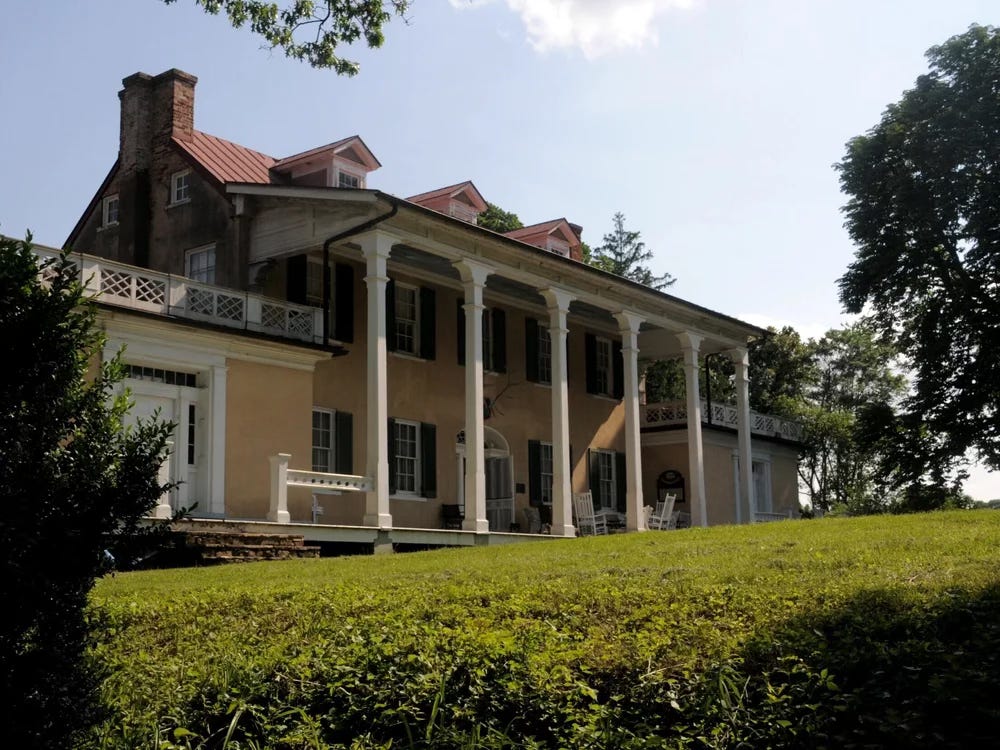
A rainstorm moved in and the sky turned darker, alive and rumbling above the old house. I loved the torrent of rain and the thunder and the lightning, warm and humid and full of electricity.
We didn’t know we were sleeping in the suite where F. Scott Fitzgerald once stayed, a friend of the family who had owned the house for generations. I felt a presence when I wrote and thought it was just being in a house built around 1775.
In the 1930s, writers F. Scott Fitzgerald and Thomas Wolfe stayed at Welbourne at the behest of their legendary editor, Maxwell Perkins. One of Perkins’ closest friends was Elizabeth Lemmon of Welbourne (their letters were published in As Ever Yours) and he wrote after one visit, “It’s as if I had drunk the milk of Paradise once and seen an enchanted place.” Fitzgerald wrote “Her Last Case,” a short story published in The Saturday Evening Post that used Welbourne as its setting: “The house floated up suddenly through the twilight…the stocky central box fronted by tall pillars, the graceful one-story wings, the intimate gardens only half seen from the front, the hint of other more secret verandas…”
Philip read my poetry and said something like, you know, you should try writing the way you talk, not like Millay or whomever you’re trying to sound like.
Oh, I was so annoyed, I wanted to smack his face, but then he laughed, grabbed me by my shoulders and threw my body underneath his onto the queen bed.
Edna St. Vincent Millay, I will have you know, is not such a bad poet to be compared to, so I will take it. He kissed and kissed me and I forgot all about what he said about my poems.
A fleeting happiness dappled the sky within me like a beautiful bird in flight.
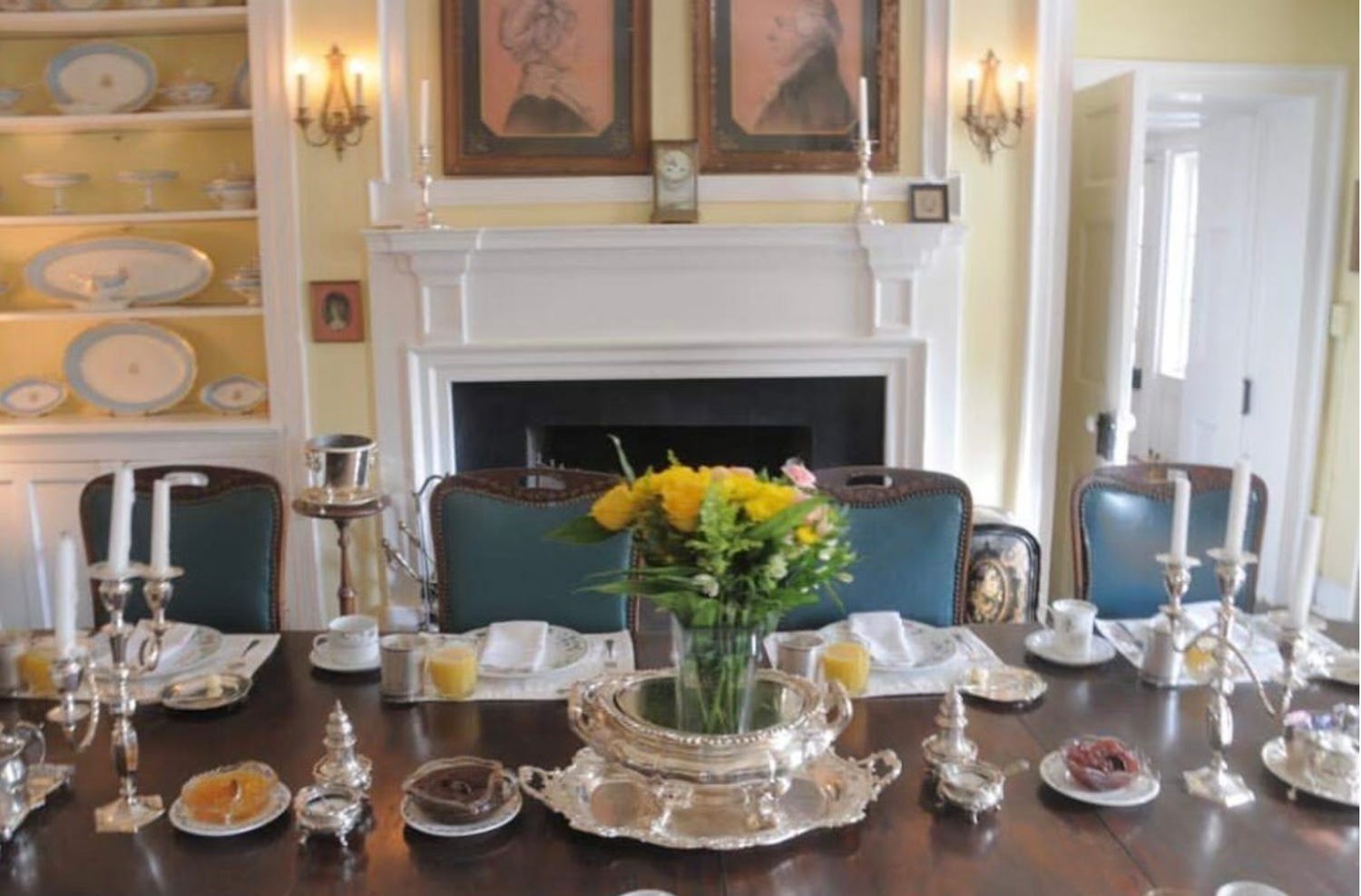
I looked out the window, heard gospel music coming from the kitchen as the cooks made our breakfast—buttermilk biscuits and cheese grits and fried tomatoes and eggs, chilled orange juice in silver tumblers.
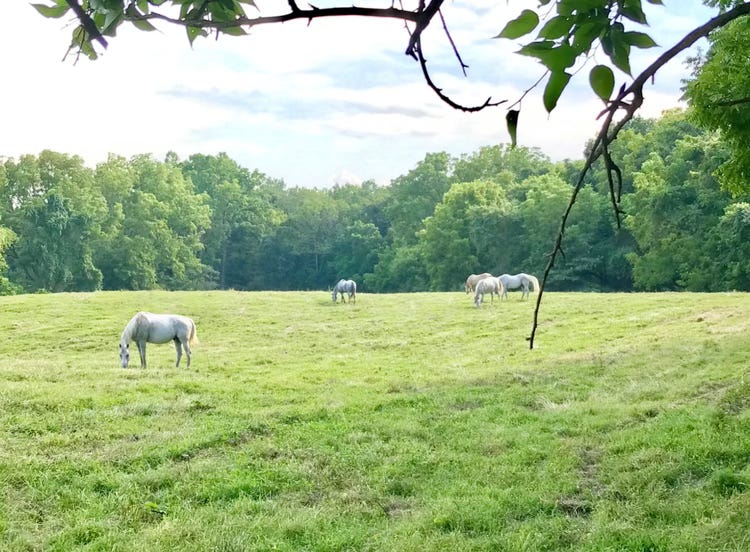
I went to walk after breakfast to find daylight wandering in fingered shadows where the trees trembled in early springtime. The horses grazed, the wind moved the clouds slowly across the gentle sky, and I wanted to stay there forever, watching the hound dogs nap on the porch and listen to birdsong and feel the earth underneath my boots.
When I left, heading down to Florida, a train through New Orleans, I carried the weight of my emotions down South, got off the train and wandered into the French Quarter. I knew in my heart I belonged there, but when I returned to Los Angeles, I loaded up my car with all my things and drove to San Francisco, hoping to stay and leave Los Angeles again.
Philip called me more often, but how we bickered about being apart, with no certainty between us. I decided I could not manage the long distance anymore. I went so far as to unplug the phone from the wall and began packing my things in the trunk of the car. I’d come back from San Francisco a month later, I thought, and then I would put all of my furniture in storage.
It was too late to stop the mail from sending him a lock of my hair in a love letter.
But it’s sentimental, I explained. He replied, but what kind of voodoo is that to send? He thought it was weird of me to send a lock of hair in a letter.
I meant it as devotion, I replied sharply into the phone receiver. I knew it was time to end things, move somewhere, forget him. There were signs we weren’t going to last when I went to visit him in Virginia. I didn’t want to pay attention to that.
I drove up to San Francisco, but on the way I caught a bad cold and lingered in Big Sur for a few days. I rented a room in a small motel where my cottage was “A” and I called it “A Hut” as it seemed like a tiny one room cabin.
I wanted to go to the hot spring baths at Esalen like Rusty and I used to do, but the fog was thick as I drove into the white opaque and could not see the front of my car.
In the middle of the night, when the baths were open to the public, I made a one-two-three U-turn on the Pacific Coast Highway and went back to A Hut.
The next day, I headed to San Fran and stayed in a hostel but nothing came of it. I was too sick to go anywhere, coughing and sneezing and wanting a place to rest. I worried if I stayed I might spend all the saved money for the move.
I drove back to Los Angeles.
My new apartment in Pasadena was one of four units in a Spanish 1930s fourplex. It had a fireplace though I never used it, thick plaster walls that felt cool to the touch, polished hardwood floors, and the lease was month to month, a relief, knowing how I moved around.
I listened to jazz and bought flowers and baked blueberry muffins, listening to a box set of the Beat poet Jack Kerouac on repeat in my new apartment. I liked Kerouac’s Lowell, Massachuetts accent, goofy and melancholy. As I listened, I’d write down ideas and words, and watch sunlight shine in bright dappled shapes through the windows.
This was also my Joni Mitchell phase, part one.
The pink neon sign outside the industrial building didn’t use the plural men in the noun ‘gentlemen,’ no it read gentleman, singular noun.
The Gentleman Club as I call it, is an industrial warehouse space wedged in by the 5 freeway and the Glendale Galleria, where I went to buy school clothes as a young girl.
I pushed open the backstage door at The Gentleman Club to work my shift. I’m greeted by the sing-song welcome of the manager. Princess, Princess, you are here, come, come, have some hummus, have some hummus. They always had a spread of pita and hummus, you gotta give them that much street credit.
Despite knowing the area, because it was two blocks from the roller rink where I roller skated as a young girl, I got confused by missing landmarks.
The old Levitz showroom is gone, the graffiti painted cat faces on the water pipes that spilled out into the reservoir were painted over with industrial gray.
I missed Strawberry Cat, and Chocolate Cat. Now they were just gray.
Yet my turning point on this existential map was right here on West San Fernando Road, where things I could never have known about until years later, such as being nine blocks away from where my biological mom once lived (and possibly where I was also conceived), which was also off the same street just blocks from my childhood roller rink, Moonlight Rollerway.
Two twenty-something girls primp in the dressing room mirror, he wants a private dance, one girl says, she tugs on her white vinyl thigh-high boots, the other adjusts her neon bikini to meet her tan lines. She looks like the Malibu Barbie doll I once had as a young girl who was engaged to my Donny Osmond doll, and I sent them off to elope in the yellow Barbie camper van. I call that girl Barbie, and the other girl, Skipper.
These two girls are best friends. I’m sure they talk shit about me behind the curtain, but I don’t care. I don’t go to the beach or the tanning salon to tan anymore. I don’t wear neon bikinis or fake nails.
I only drink good champagne, not the crap stuff. I collect jazz and blues CDs for my stage sets, not heavy rock, grunge, or metal. I don’t smoke cigarettes or pot. The other girls are into bands like Nirvana, Alice in Chains, and Smashing Pumpkins. I’m into Muddy Waters and Billie Holiday and Sting and Sade.
I go back to my place and shower off the cigarette smoke and watch 1930s black and white films on my VCR. I’d seen all of Hollywood film noir, inventing my burlesque style to be more like Rita Hayworth’s look.
In the mirror, gazing deep into my own hazel brown eyes, I concentrate my thoughts, outlining each eye with black kohl pencil, thinking maybe I’ll move to New Orleans, I could save up, maybe, and as I thought about these things until the deejay raised the music level and announced the next girl on stage, Jessica.
That was my stage name. Jessica, as in Rabbit.
I step out through the curtain as the deejay blasts Diamonds Are a Girl’s Best Friend.
I move my hips side to side slowly in my white satin spandex gown and I’m wearing elbow length white gloves and a rhinestone necklace, parading down the catwalk, glowing under the black light, sashaying like Marilyn Monroe as the stage is packed with Japanese businessmen, and at the very end of the stage, my ex fiancé has lined up a bunch of twenty dollar bills on the rail.
The second song of my stage set begins, something sultry, maybe an Ella Fitzgerald or a Billie Holiday song, or Sade. My style was retro burlesque, not thigh-high boots gripping the pole to the growl of Axel Rose of Guns ‘n’ Roses and grungy guitar. I knew my music was playing, but I could not go out there.
The deejay shouts into the dressing room: Jessica! Jessica, get your naked ass up there!
I smell him coming down the hall, reeking of Jack and Coke and Marlboro cigs, but I can’t, my heart is pounding. I want to throw all my lingerie into my suitcase and bail out the back door.
My voice stuck in my throat, I’m curled up in the dressing chair, shaking my head. The manager calls out Princess, Princess, from his office door next to the dressing room, and I know I have to do it.
Barbie looks worried and reaches out to touch my shoulder, asks if I’m okay. You aren’t drunk or something, asks Skipper, but I don’t blame you, there’s a busload of Japanese guys out there with their wives, it’s so weird!
The catwalk stage is surrounded by mirrored walls and rows of faux plaster busts of about fifty Venus de Milos. The stage rail has Japanese tourists all around, my ex at the very end of the catwalk, staring at me.
It’s as if they’re watching a theater act or a movie instead of a naked woman onstage.
And yes, he’s still there, my ex-fiancé, the man I spent several years sleeping naked with. It’s all a collision, a fever dream, a bad dream you cannot wake up from.
After my set, he asks to see me. The deejay comes to the dressing room to deliver the message.
What else do you say to someone that you almost married? After a bowl of soup in an all-night deli, we went back to my apartment. I’d only moved in that month, so there was little furniture.
We awkwardly shared my double bed, not fully sleeping, not making love, just half there next to each other until daylight. I think he had hoped we would get back together and move to San Francisco.
The next morning, I made a cup of tea for him, which sat untouched on the kitchen counter (how could I forget he drinks coffee) as he got dressed to leave.
I felt him searching for words to say, as I imagined the sentences I wanted him to say, like I miss you and why don’t we try again, but instead, he said, you know, I always thought of you as a diamond in the rough, if I could just polish you, you’d shine.
Then, like all of the letters completely filled out on the display board of a Wheel of Fortune puzzle, I could spell out the reason why I left him.
The snow steadily fell as I noticed the cowbell was still hanging by the same rope I tied it with on the spindles of the gate. The bell was weathered after thirty years of rain and sun, the gold paint worn away.
Was I sad about the memory of leaving, or the loss of that part of myself?
I see Autumn at the preschool in Silverlake where our children play in the school playground. We hugged at drop-off, her mom nudged her to do it first, the way two women hug who have both become the people they were becoming back when they were girls drawing unicorns and rainbows with glitter pens.
Years pass again and she would direct a film of the book she pulled off the shelf when we were twelve—Emma.
The sun broke in golden light and my chest heaved up as I inhaled a cleansing breath. I was right to leave, to take the road less traveled, to find myself instead of the safe versions of me that others wanted to put me into, and those darkest moments where I felt lost were found in the adventure of following my heart away from the fault lines and broken places.
Wow!!!!! Thank you so much for writing!! I know more about you now!!